5 Nigerian Real Estate Scams Targeting UK Diaspora (And How to Avoid Them)
Sending money from the UK to buy Nigerian property? These are the exact scams targeting British-Nigerians—and the red flags that can save you £20,000+.
Your colleague at work just lost £18,000.
She's been saving for three years—working double shifts at the NHS, skipping holidays, living frugally in her Croydon flat—all to buy land in Lagos for her retirement home.
Last month, she wired the money to an "estate agent" who showed her beautiful photos, had a professional website, and even sent her a "Certificate of Occupancy" via WhatsApp.
The agent stopped responding two weeks ago. The land doesn't exist. The C of O was fake. Her £18,000 is gone.
She's not alone. According to informal estimates from UK-based Nigerian community groups, British-Nigerians lose millions of pounds annually to Nigerian real estate scams.
And the scammers are getting smarter. Gone are the days of obvious email scams. Today's fraudsters have professional websites, fake lawyers, forged government documents, and even accomplices who'll show you "the land" in person.
But here's the thing: Every scam has patterns. Red flags. Tells.
I'm going to show you the exact scams targeting UK diaspora in 2025—and how to protect yourself.
Scam #1: The Fake Estate Agent with a Real Website
How It Works:
You're browsing Facebook or Google, searching for "buy land in Lagos from UK." You find a website that looks legit:
- Professional design
- Photos of properties
- "About Us" page with staff photos
- Contact numbers (UK and Nigerian)
- Even a business registration number
You contact them. They're responsive, friendly, helpful. They send you listings, virtual tours, even introduce you to their "lawyer."
You pay a deposit. They promise to process the documents. Then... silence.
The website disappears. The phone numbers stop working. Your money is gone.
Why It Works:
Anyone can build a professional website for £500 and buy stock photos. Business registration numbers can be faked or cloned from legitimate companies.
British-Nigerians trust websites because in the UK, regulations make it harder for scammers to operate openly online. We forget that Nigeria's digital space is less regulated.
Red Flags:
- Website is less than 1 year old (check domain age at who.is)
- No physical office address (or address is a residential flat)
- Only contactable via WhatsApp (no landline, no office)
- Pressure to pay quickly ("This property has other interested buyers")
- They ask you to send money to personal accounts, not company accounts
- No verifiable reviews from actual clients (not just testimonials on their site)
How to Protect Yourself:
Google the company name + "scam" or "review" Check Companies House (UK) if they claim UK registration Ask for their office address and verify it via Google Maps Street View Request video call from their office (not just a WhatsApp video chat from someone's car) Ask for references from other UK diaspora clients (call these people) Never pay into personal accounts—company accounts only Use escrow through your own lawyer, not theirs
Scam #2: The Family Member or "Friend of the Family"
How It Works:
Your uncle calls from Nigeria. Or your distant cousin. Or "your dad's friend's son who's now in real estate."
They have the "perfect opportunity" for you:
- Land selling below market value
- They can get you a special deal
- "Family discount"
- Trust me, we're family!
You send the money. They buy the land... in their own name. Or they pocket half and buy a smaller plot. Or the land doesn't exist at all.
When you ask questions, you get: "You're insulting me. Is this how we treat family?"
Why It Works:
Guilt. Cultural expectations. The belief that "family would never scam family."
But here's the hard truth: More British-Nigerians lose money to family members than to strangers. Because we give family access we'd never give a stranger—no contracts, no receipts, no oversight.
Red Flags:
- They're offended when you ask for proper documentation
- "Just send the money, I'll handle everything"
- They won't introduce you to a lawyer
- They ask you to send money to their personal account (not through proper channels)
- The "deal" is only available if you act fast
- They can't or won't provide verifiable proof of the property
How to Protect Yourself:
Treat family transactions as professionally as you would strangers Insist on written agreements, even with family Use your own lawyer (not one they recommend) Put property in YOUR name from day one Get receipts for every payment If they're offended by due diligence, that's a red flag itself Remember: Real family protects you. Fake family gets offended when you protect yourself.
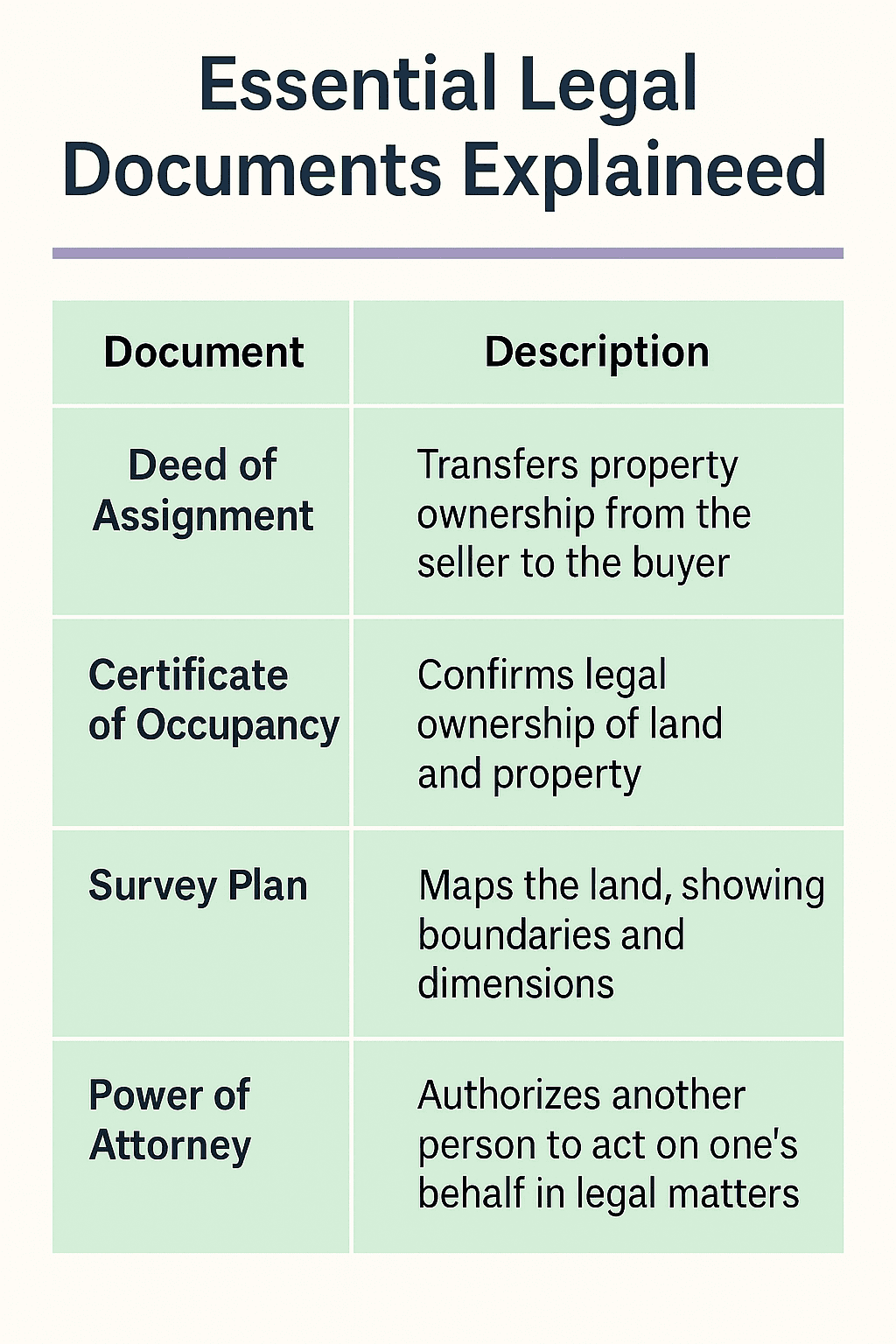
Scam #3: The Forged Certificate of Occupancy
How It Works:
You find a property you like. You ask for the Certificate of Occupancy. The seller sends you a PDF or photo.
It looks real:
- Official letterhead
- Government seal
- C of O number
- Proper formatting
You feel comfortable. You pay.
Later, when you try to verify the C of O with the Land Registry, you discover it's fake. A high-quality forgery, but fake nonetheless.
The seller disappears. Or claims they were scammed too (they weren't).
Why It Works:
From the UK, you can't easily tell a real C of O from a fake one. Scammers know this. They invest in high-quality forgeries—professional printers, authentic-looking stamps, convincing formatting.
Red Flags:
- Seller only provides digital copies (photo/PDF), never the original
- Seller makes excuses why you can't see the original ("It's at the lawyer's office," "It's being processed")
- The document looks too new (a C of O from 1998 should show aging)
- Seller refuses to allow you to verify it at the Land Registry
- The C of O number format doesn't match standard formatting for that state
How to Protect Yourself:
Hire a property lawyer in Nigeria to physically verify the C of O at the Land Registry Use online verification tools (Lagos State has digital verification) Insist on seeing the original document (via video call or in person) Cross-check the C of O number with government databases Look for signs of forgery (wrong paper quality, mismatched fonts, incorrect seals) Never pay based on digital copies alone
Read our full guide on document verification
Scam #4: The "Omonile Settlement" Extortion
How It Works:
You buy land with proper documentation. Everything is legitimate. You start construction.
Then your contractor calls: "Boss, the omonile came. They're demanding ₦500,000 or they'll stop construction."
You pay. A month later, they're back. Different group. Same demand.
This continues indefinitely. Your construction budget evaporates into "settlement fees."
Here's the twist: Sometimes, your contractor is in on it. The omonile never showed up. He's pocketing the "settlement" money.
Why It Works:
You're in London. You can't verify if omonile actually showed up. You trust your contractor. You want to avoid delays, so you pay.
Scammers know diaspora investors will pay to avoid confrontation and keep projects moving.
Red Flags:
- Constant new demands from different "groups"
- No receipts for settlements
- Contractor insists on handling it (won't let you speak to them directly)
- Amounts keep increasing
- "Emergency" calls demanding immediate payment
- Contractor can't provide names, photos, or proof of who these people are
How to Protect Yourself:
Research omonile issues in the area BEFORE buying Pay legitimate community levies upfront (once) during purchase Install CCTV to monitor site (verify if omonile actually show up) Insist on meeting omonile via video call before paying anything If payments are legitimate, get receipts with names and signatures Report harassment to Lagos Anti-Land Grabbing Task Force Consider hiring a local project manager independent of your contractor
Read our full omonile protection guide
Scam #5: The "Government Allocation" or "Distress Sale" Deal
How It Works:
Someone contacts you with an incredible opportunity:
- Land being sold by government at below-market rates
- Or a "distress sale" where someone needs cash urgently
- Or a foreclosure/auction property
- Price is 40-60% below market value
They create urgency: "Pay deposit today or you'll lose it to someone else."
You pay. The land doesn't exist. Or it belongs to someone else. Or it's government land that can't be sold.
Why It Works:
Everyone wants a deal. Scammers exploit your desire to be the "smart investor" who found a bargain.
They use official-sounding language: "government allocation," "bank foreclosure," "estate liquidation" to make it sound legitimate.
Red Flags:
- Price is significantly below market (30%+ below is suspicious)
- Extreme urgency ("decide today or lose it")
- The "seller" is always someone who can't meet you (in prison, traveling, sick)
- Documents look hastily prepared
- You can't speak to the actual owner
- The property isn't publicly listed or advertised
How to Protect Yourself:
If it's too good to be true, it probably is Verify any "government allocation" directly with the state land bureau For foreclosure/auction properties, verify with the bank directly Visit the property physically (or send someone you trust) Research comparable market prices (is this really a deal, or a scam?) Take your time—legitimate deals can wait; scams always rush you
Bonus Scam: The Fake Lawyer or "Legal Representative"
How It Works:
The seller introduces you to "their lawyer" who will "handle everything."
This person:
- Has a website
- Has business cards
- Speaks professionally
- Drafts contracts
You feel safe because "a lawyer is involved."
But the "lawyer" is either:
- Not a real lawyer (fake credentials)
- A real lawyer working with the scammer
- A completely fake identity
They facilitate the scam by giving it a veneer of legitimacy.
How to Protect Yourself:
NEVER use the seller's lawyer—always hire your own Verify any lawyer with the Nigerian Bar Association Check their enrollment number (real lawyers have verifiable NBA numbers) Interview your lawyer via video call Get referrals from other UK diaspora investors Your lawyer should work for YOU, not the seller
The Universal Red Flags (Across All Scams)
No matter the scam type, these warning signs are consistent:
Pressure to pay quickly ("Deal expires today," "Someone else is interested") Reluctance to provide documentation (original docs, verifiable proof) Payment to personal accounts instead of company/escrow accounts Communication only via WhatsApp (no official email, no office line) Price too good to be true (significantly below market) Seller avoids video calls or won't show face Unwillingness to let you verify independently (check documents, visit property) Emotional manipulation ("Don't you trust me?" "We're family!") No physical presence (no office, can't meet in person) Sketchy reviews or no reviews (or only testimonials they control)
If you see 3 or more of these flags, STOP. Do not proceed. Walk away.
Your Anti-Scam Checklist
Before sending any money from the UK to Nigeria for property, ensure:
- I've hired my own independent property lawyer in Nigeria
- I've verified the seller's identity (video call, ID verification)
- I've researched the company/agent (Google reviews, community feedback)
- The property physically exists (verified via Google Maps, video tour, or trusted person visiting)
- Documents have been independently verified at Land Registry
- I'm paying into a lawyer's escrow account (not seller's personal account)
- I have written contracts with clear terms
- I've researched market prices (this price is reasonable, not suspiciously low)
- I'm not being rushed (I have time to think and verify)
- I've consulted with other UK diaspora investors who've bought successfully
If you can't check all these boxes, don't pay.
What to Do If You've Already Been Scammed
If you've sent money and realized it's a scam:
Step 1: Stop all further payments immediately
Step 2: Document everything
- Screenshots of all conversations
- Receipts of money transfers
- Photos/videos they sent you
- Names, phone numbers, addresses (even if fake)
Step 3: Report to authorities
- Nigerian Police (if you know the scammer's location in Nigeria)
- UK Action Fraud (www.actionfraud.police.uk)
- EFCC Nigeria (Economic and Financial Crimes Commission)
- Your bank's fraud department
Step 4: Warn others Post in UK Nigerian community groups (Facebook, WhatsApp) to prevent others from falling for the same scam.
Step 5: Accept the loss This sounds harsh, but Nigerian scam recovery is difficult. International legal action is expensive and often unsuccessful. Learn, warn others, and move forward.
How to Actually Buy Safely from the UK
The good news? Thousands of British-Nigerians successfully buy Nigerian property every year without getting scammed.
Here's the safest approach:
- Work with established companies that specialize in diaspora clients
- Hire your own lawyer (never use the seller's)
- Use escrow accounts (never pay directly to sellers)
- Verify everything independently (don't take anyone's word)
- Take your time (good properties will still be there in 30 days)
- Visit Nigeria (if possible) before finalizing large purchases
- Join UK-Nigerian investor communities for referrals and warnings
Working with Holford Homes: Pre-Vetted, Scam-Free
I'm biased, but this is why we exist.
When you buy through Holford Homes:
- Every property is pre-verified (title searches completed before listing)
- All documents are authentic (we've done the checks)
- Transparent pricing (no hidden fees or last-minute surprises)
- UK-based support team (we understand your concerns)
- Escrow payment system (your money is protected)
- Legal team on retainer (no fake lawyers)
Could you still do your own due diligence? Absolutely. Should you? Yes.
But we've eliminated 90% of the scam risk before you even start.
Explore verified properties or book a consultation.
Final Thoughts
Nigerian real estate scams targeting UK diaspora are real, common, and devastating.
But they're also avoidable.
Every scammer relies on the same tactics: urgency, trust manipulation, fake legitimacy, and your distance from Nigeria.
When you know the patterns, you become almost scam-proof.
Your £20,000 is precious. It's years of NHS shifts, corporate jobs, sacrifice, and saving.
Don't lose it to a scammer because you rushed, trusted blindly, or skipped verification.
Protect yourself. Verify everything. Use professionals. Take your time.
There's real wealth to be built in Nigerian real estate. Just make sure you're building it, not funding someone's next vacation.
Have you encountered scams while trying to buy Nigerian property from the UK? Share your story (anonymously if preferred) to warn others. Or join our UK diaspora investor community to connect with people who've successfully navigated the process.
Sources:
- UK Action Fraud
- Nigerian Bar Association
- Lagos State Anti-Land Grabbing Task Force