How to Verify Land Documents in Nigeria from the UK (Without Getting Scammed)
Living in the UK and buying land in Nigeria? Here's your complete guide to verifying land documents remotely so you don't lose your hard-earned pounds to fraudsters.
It's 2 AM in London, and you can't sleep. You've been scrolling through property listings in Lagos for the past three hours, calculator app open, converting pounds to naira, dreaming about that plot in Lekki or Ajah where you'll finally build your dream home.
But here's the thing that's keeping you awake: How do you know if those documents are real?
You've heard the horror stories. Your colleague at work lost £25,000 to a fake land deal. Your cousin's friend bought land that turned out to belong to someone else. The WhatsApp group is full of warnings about forged C of Os and shady agents.
And you're sitting there in Manchester or Birmingham, 4,000 miles away, trying to figure out how to verify documents for land you can't even touch.
I get it. The distance makes everything scarier. But here's what most people don't tell you: verifying land documents from the UK is actually easier today than it was five years ago. You just need to know exactly what to do.
Let me show you.
Why Document Verification Matters More Than You Think
Here's a stat that should wake you up: According to industry experts, about 60-70% of land disputes in Nigeria stem from fraudulent or questionable documentation.
That's not a typo. More than half.
Your £30,000 can evaporate overnight if you skip this step. And trust me, the British courts won't help you recover money lost to a Nigerian land scam. You're on your own.
But here's the good news: The Nigerian government has actually made remote verification possible. You don't need to fly back home every time you want to check a document. You just need to know which documents to verify and how to do it.
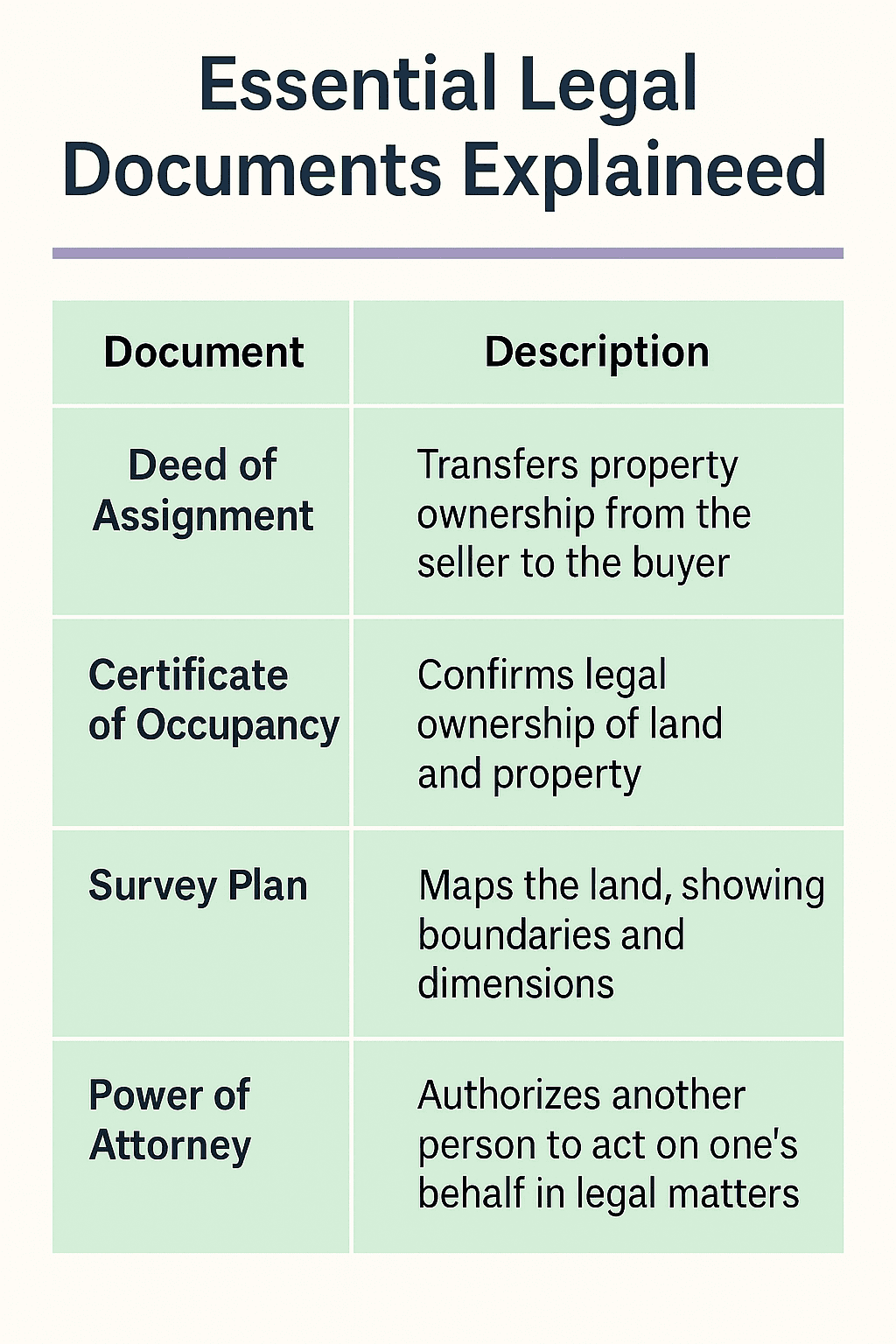
The 5 Essential Documents You Must Verify
Before we talk about how to verify, let's talk about what to verify. Not all documents are created equal, and some matter way more than others.
1. Certificate of Occupancy (C of O)
This is your golden ticket. The C of O is the ultimate proof that the land is registered with the Lagos State (or any other state) government and that the person selling to you actually has the right to sell it.
Here's what you need to check:
- The C of O number
- The name on the certificate matches the seller
- The plot size and location match what you're being sold
- The date of issuance (older C of Os are generally more reliable)
2. Survey Plan
The survey plan shows the exact size, shape, and location of the land. This document prevents you from buying a 500 sqm plot that's actually 300 sqm, or land that doesn't exist at the coordinates claimed.
What to verify:
- The surveyor's name and license number
- The coordinates and beacons
- That it matches the C of O description
- The surveyor's seal and signature
3. Deed of Assignment
This is the legal document that transfers ownership from the seller to you. It's basically the receipt that says "This land now belongs to you."
Must verify:
- Names of both parties (seller and buyer)
- Consideration amount (purchase price)
- Proper legal description of the property
- Witnesses' signatures
- Governor's Consent (more on this below)
4. Governor's Consent
In Lagos and most Nigerian states, any land transaction requires the Governor's approval. Without it, your purchase isn't legally recognized, even if you have a C of O.
Check for:
- The consent number
- That it corresponds to your specific transaction
- The effective date
- The state government seal
5. Land Registry Receipt
This proves that the land is registered and that all fees have been paid to the government.
Verify:
- Payment receipt numbers
- That the amounts paid match government rates
- The date stamps from the registry
How to Verify Documents from the UK (Step-by-Step)
Alright, now let's get into the actual verification process. I'm going to give you multiple methods because redundancy is your friend when £20,000+ is on the line.
Method 1: Official Government Website Verification
Lagos State has digitized their land registry. This is your first stop.
Step 1: Go to the Lagos State Land Registry website (lslr.lagosstate.gov.ng)
Step 2: Click on "Search Land Records" or "Verify Documents"
Step 3: Enter the C of O number or file number
Step 4: Cross-check the information that comes up:
- Does the name match?
- Does the location match?
- Does the plot size match?
- Is there any encumbrance or caveat on the land?
You can do this from your laptop in London at any time. No need to travel.
Pro tip: Save screenshots of every search you do. Date-stamp them. These could be evidence later if anything goes wrong.
Method 2: Hire a Property Lawyer in Nigeria
This is non-negotiable. I don't care how tech-savvy you are or how much you trust the seller. You need a lawyer.
But not just any lawyer. You need a property lawyer (also called a real estate attorney) who specializes in land transactions.
Here's what they'll do:
- Conduct a land search at the Land Registry
- Verify the authenticity of all documents
- Check for any existing liens or disputes on the property
- Ensure the property isn't under government acquisition
- Draft or review your purchase agreement
- Facilitate the payment process safely
How to find a trustworthy lawyer from the UK:
- Ask for recommendations from other diaspora investors (UK Nigerian professional groups on LinkedIn are gold)
- Check if they're registered with the Nigerian Bar Association
- Look for lawyers who use escrow accounts (this protects your money)
- Interview at least 3 before choosing one
- Never use the seller's lawyer—always get your own
Budget £500-£1,500 for legal fees. Yes, it's expensive. But it's cheaper than losing £25,000.
Method 3: Use Licensed Surveyors for Physical Verification
Documents can look perfect on paper but the land might not exist, or it might be swampland, or it might be smaller than claimed.
You need boots on the ground.
From the UK, you can hire a licensed surveyor to:
- Visit the physical location
- Verify the beacons and coordinates
- Measure the actual plot size
- Take photos and videos
- Check for any encroachments or illegal structures
- Confirm the land isn't in a flood zone or government acquisition area
How to find them:
- Ask your lawyer for recommendations
- Use the Surveyors Council of Nigeria (SURCON) directory
- Request their license number and verify it on SURCON's website
A professional survey report costs between £200-£600 depending on the location and size of land.
Method 4: Virtual Verification Tools and Platforms
Technology is catching up. Several platforms now offer remote verification services specifically for diaspora Nigerians.
Some options:
- PropertyPro's verification service
- Nigeria Property Centre's document check
- Private verification companies that specialize in diaspora transactions
These services typically cost £100-£300 and provide a verification report within 5-7 days.
Method 5: Bank Verification (For Serious Buyers)
If you're spending serious money (£50,000+), some Nigerian banks offer property verification services as part of their mortgage or investment products.
Banks like GTBank, Access Bank, and First Bank have diaspora desks that can help verify:
- Document authenticity
- Seller's identity
- Property valuation
- Market rates for the area
This is especially useful if you're planning to finance part of the purchase through a Nigerian bank.
Red Flags That Should Make You Walk Away Immediately
Your gut feeling is usually right. If something feels off, it probably is. Here are the warning signs:
Red Flag #1: The Seller Rushes You
"Someone else is interested. Pay deposit today or you'll lose it."
This is the oldest scam in the book. Legitimate land sales take weeks, sometimes months. Anyone pushing you to pay immediately is hiding something.
Walk away.
Red Flag #2: Documents Have Different Names
The C of O says "John Adekunle." The seller's ID says "John Adebayo." The survey plan says "J.A. Enterprises."
Inconsistency in names is a massive red flag. Even small spelling differences matter in legal documents.
Don't proceed until this is explained and rectified with proper legal chain of title documentation.
Red Flag #3: The Seller Won't Let You Hire Your Own Lawyer
"My lawyer will handle everything for both of us. It'll save you money."
No. Absolutely not. This is how people get scammed.
Each party must have independent legal representation. Period.
Red Flag #4: Documents Look Too New or Too Perfect
A C of O from 1995 shouldn't look like it was printed yesterday. Old documents should show age—slight yellowing, wear at the folds, stamps that look period-appropriate.
If everything looks crisp and new for a supposedly old document, it might be a very good forgery.
Red Flag #5: The Price Is Suspiciously Low
Land in Lekki Phase 1 for £8,000? Land in Banana Island for £50,000?
Come on. You know that's not realistic.
If the price is more than 30-40% below market rate, something is very wrong. Either:
- The land doesn't exist
- The documents are fake
- The land has serious issues (disputes, flooding, government acquisition)
- It's not the size claimed
Do your market research. Check comparable prices. If it seems too good to be true, it definitely is.
Red Flag #6: No Clear Chain of Title
Every piece of land has a history. Who owned it before the current seller? And before that?
If the seller can't provide a clear chain of title showing how the land passed from owner to owner, that's a problem.
You should be able to trace ownership back at least 30 years (40+ years is better). Each transfer should have proper documentation.
Red Flag #7: The Seller Won't Meet Via Video Call
It's 2025. Everyone has WhatsApp video, Zoom, Google Meet.
If the "seller" will only communicate via text, email, or voice calls but refuses to show their face, that's suspicious.
You need to see the person you're dealing with. Verify their identity. Check their ID on the video call.
The Smart Verification Checklist (Print This Out)
Before you pay a single pound, go through this checklist:
- C of O verified on state government website
- C of O number cross-checked with Land Registry
- Survey plan verified with a licensed surveyor
- Physical land inspection completed with photos/video
- Property lawyer conducted independent title search
- Governor's Consent verified (if applicable)
- Land Registry receipts checked for authenticity
- Seller's identity verified (ID card, video call)
- Market price comparison done (property is within 20% of market rate)
- Clear chain of title provided going back 30+ years
- No litigation, liens, or encumbrances on the land
- Land is not in government acquisition zone
- Neighbors interviewed/contacted to confirm boundaries
- Payment will go through lawyer's escrow account (not directly to seller)
- Purchase agreement reviewed by my independent lawyer
If you can't check all these boxes, don't proceed. It's that simple.
What It Actually Costs to Verify Property from the UK
Let's talk real numbers. Here's what you should budget for proper verification:
- Property lawyer: £500 - £1,500
- Licensed surveyor (physical inspection): £200 - £600
- Document verification service: £100 - £300
- Land search fees: £50 - £150
- Travel for your lawyer/surveyor: £50 - £200
Total: £900 - £2,750
I know that seems like a lot. But compare it to:
- Losing £25,000 to a scam: Priceless (in the worst way)
- Cost of legal battles in Nigerian courts: £5,000 - £20,000+
- Emotional stress and wasted time: Immeasurable
Verification isn't an expense. It's insurance.
How Long Does Verification Take?
Be realistic about timelines. Proper verification isn't a 48-hour process.
Here's the typical timeline:
- Initial document review by lawyer: 3-5 days
- Official land registry search: 7-14 days
- Physical survey and inspection: 5-10 days
- Governor's Consent verification: 7-21 days
- Full verification report: 14-30 days total
If you're in the UK and the seller is pressuring you to pay before the 30-day mark, that's a red flag (see above).
Good land isn't going anywhere. Take your time.
What to Do If You Discover Fake Documents
So you've run the checks and discovered the C of O is forged, or the land is under dispute, or the seller isn't the real owner.
Here's your action plan:
Step 1: Stop all communication with the seller immediately. Don't confront them. Don't threaten them. Just go silent.
Step 2: Document everything. Save all messages, emails, documents, receipts, photos. Everything.
Step 3: If you've already paid money, contact your lawyer immediately to explore recovery options.
Step 4: Report to the Nigerian Police (if you're pursuing legal action) and the EFCC (Economic and Financial Crimes Commission) if it's a significant amount.
Step 5: Warn others. Post in diaspora investment groups (anonymously if preferred) so others don't fall for the same scam.
Step 6: Cut your losses and move on. Don't throw good money after bad trying to recover funds from a sophisticated scammer.
The Best Verification Approach: Layer Your Protection
Don't rely on just one verification method. Stack them:
Layer 1: Online government database check (free, instant) Layer 2: Hire your own property lawyer (£500-£1,500) Layer 3: Commission an independent physical survey (£200-£600) Layer 4: Use a third-party verification service (£100-£300)
Each layer catches things the others might miss. Yes, it costs more. But the overlapping verification is what separates people who successfully invest from people who lose money.
Working with Holford Homes: How We Verify Everything for You
Look, I'm clearly biased here, but this is why companies like Holford Homes exist.
We handle the verification nightmare so you don't have to. When you work with us:
- Every property has been pre-verified with clear title
- We have in-house lawyers who conduct searches before we even list a property
- Our surveyors physically inspect and measure every plot
- We provide virtual tours and drone footage for diaspora clients
- All documents are made available for your independent lawyer to review
- We facilitate Governor's Consent applications
- Payment goes through proper legal channels (no cash-in-hand nonsense)
You're still welcome (and encouraged) to do your own independent verification. But we've done the heavy lifting already.
Book a free consultation to talk about verified properties ready for diaspora buyers.
Your Next Steps
If you're serious about buying land in Nigeria from the UK, here's what to do this week:
This week:
- Join UK Nigerian property investment groups on Facebook and LinkedIn
- Get recommendations for 3 property lawyers in Nigeria
- Create a verification checklist (use mine above)
- Set your verification budget (£900-£2,750)
Next week: 5. Start researching properties (but don't pay anything yet) 6. Interview the 3 lawyers and choose one 7. Learn how to navigate the Lagos Land Registry website
Within a month: 8. Find a property you're interested in 9. Engage your lawyer to start verification 10. Commission a physical survey 11. Run all the checks in the verification checklist
Don't rush this. The land will still be there in 30 days. And if it's not, then it wasn't meant for you.
Final Thoughts
Buying land in Nigeria from the UK doesn't have to be a gamble. Yes, there are scammers. Yes, there are fake documents. Yes, people lose money.
But with proper verification, you dramatically reduce your risk.
The diaspora owns 70% of real estate investments in Nigeria. That's not an accident. Nigerians abroad are building wealth back home every single day. You can too.
Just verify first. Trust second.
Your £25,000 deserves that level of protection.
Want to skip the verification hassle and work with pre-verified properties? Explore our diaspora-focused listings or book a free consultation to discuss your specific needs.
Remember: The only stupid question is the one you don't ask. And the only stupid purchase is the one you don't verify.
Have you verified land documents from abroad? What was your experience? Share your story in the comments below or join our diaspora investor community.